
Why the word "pattern" still haunts me (and how I'm getting over it)
A reflection on a design system project, silent feedback, and what I’d do differently today with AI

There’s a project from last year that still haunts me a little.
Not in a dramatic way. More like... You know when you randomly remember something at 11 pm and just sigh? That kind of haunting.

It was my last big project in the Design System team: a pattern contribution model.
The idea was simple:
Our backlog of pattern requests kept growing → our team stayed small → and there was no way we could keep saying “we will check this with the pattern epic later this year” anymore.
So I was assigned to create (yet another) process that would let product designers contribute patterns with us, instead of just relying on the Design System team.
The project
Some backstory, for context.
You know already that our team was small, and requests in our channel (which were collected by an automated Slack form I built to track these before AI became a thing, a story for another post) were increasing like crazy.
And pattern questions were, by far, the most common thread in our support requests. We couldn't answer them on the spot “just like that”. A lot of the time, we genuinely didn't have the answers. And figuring those answers (at least used to) take time.
So the goal wasn’t just “clear the backlog.” It was to build a contribution model in which Product Designers wouldn’t just ask us for patterns but also help us define them. Doing this with them, not for them.
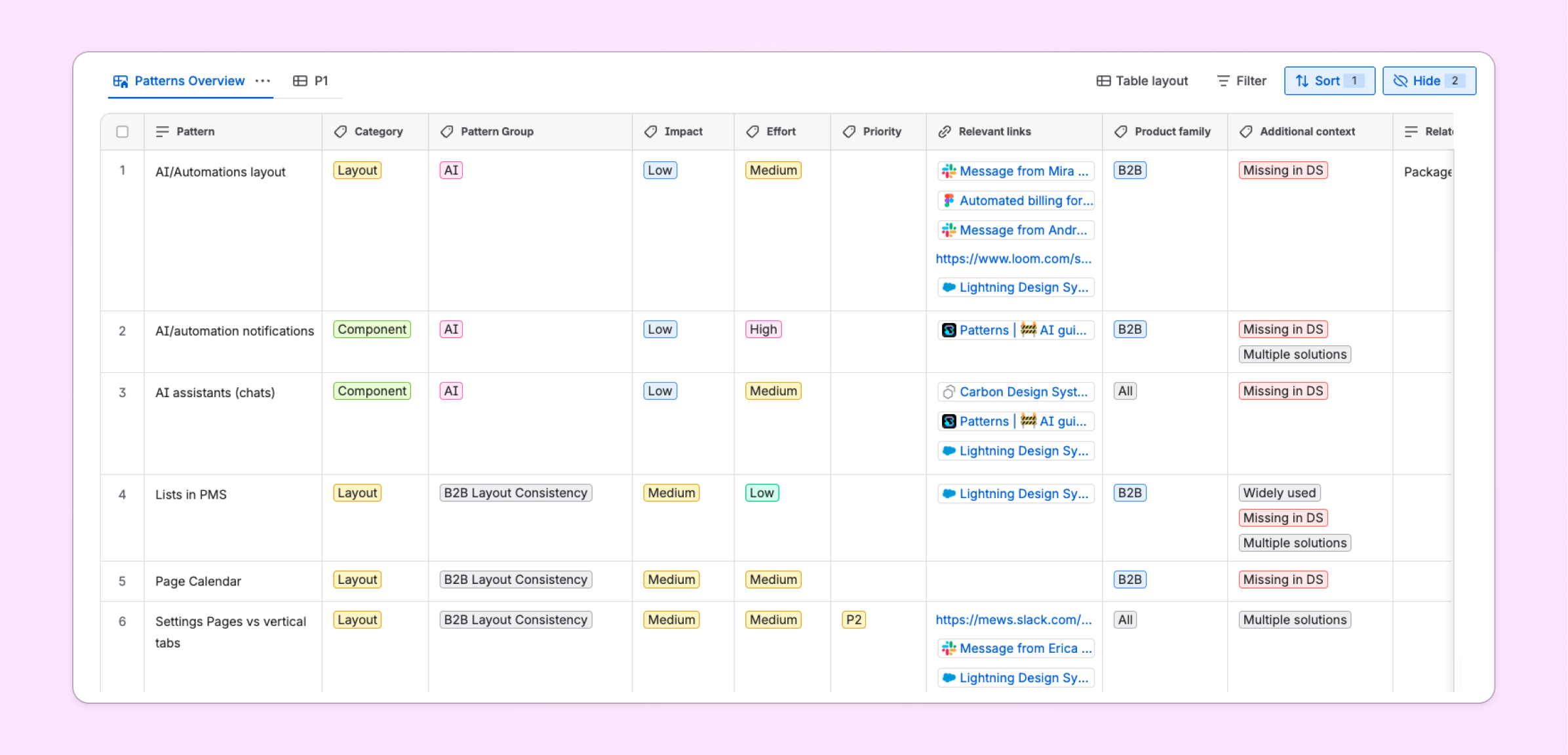
We picked a pilot from that backlog to test the model: a status indicator. Medium effort, medium value, one of our most requested patterns. Small enough to be a good test case.
From hero to zero
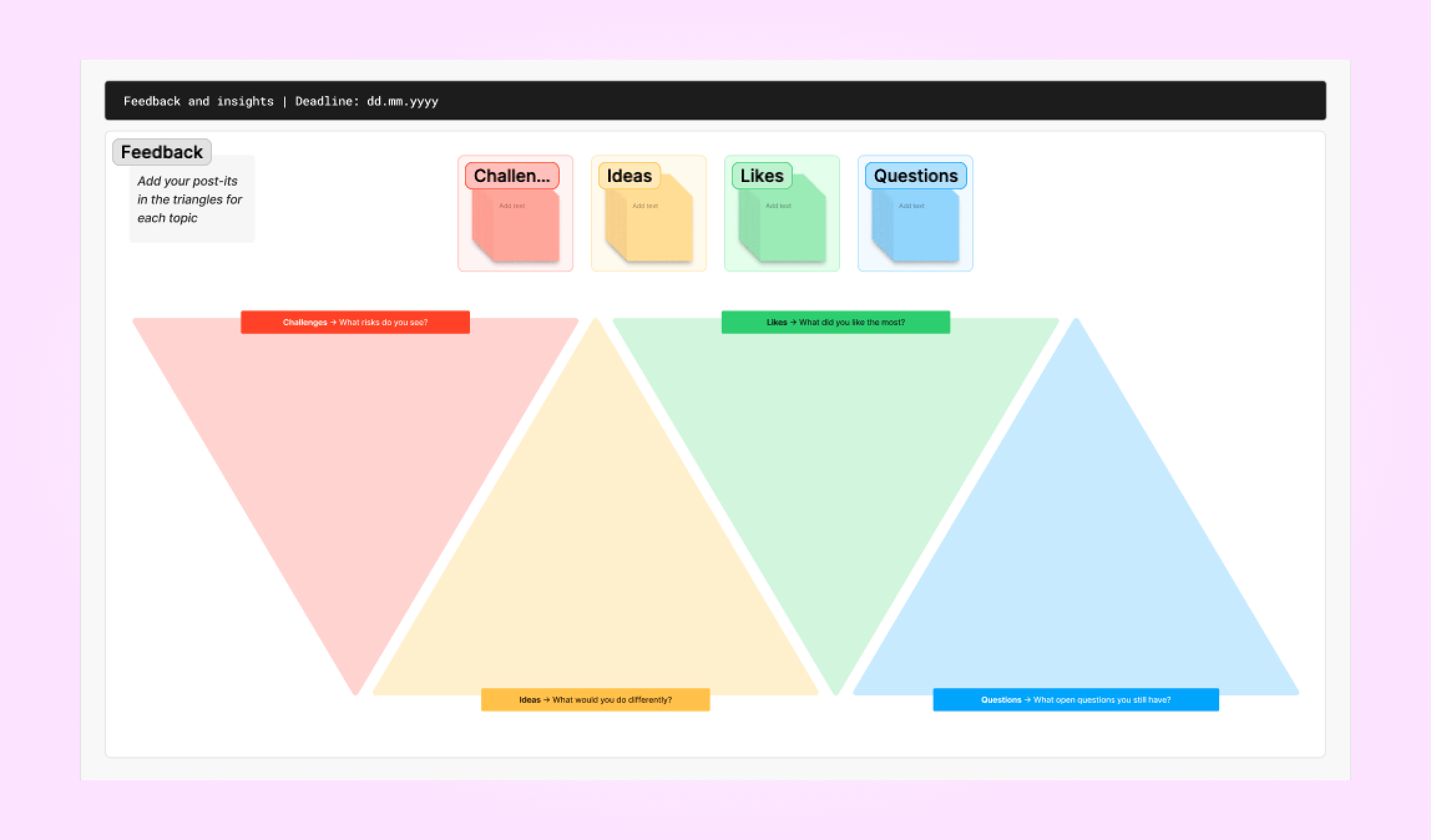
To kick things off, I built a FigJam board. Like I usually do (and knew this was one of my strongest suits).
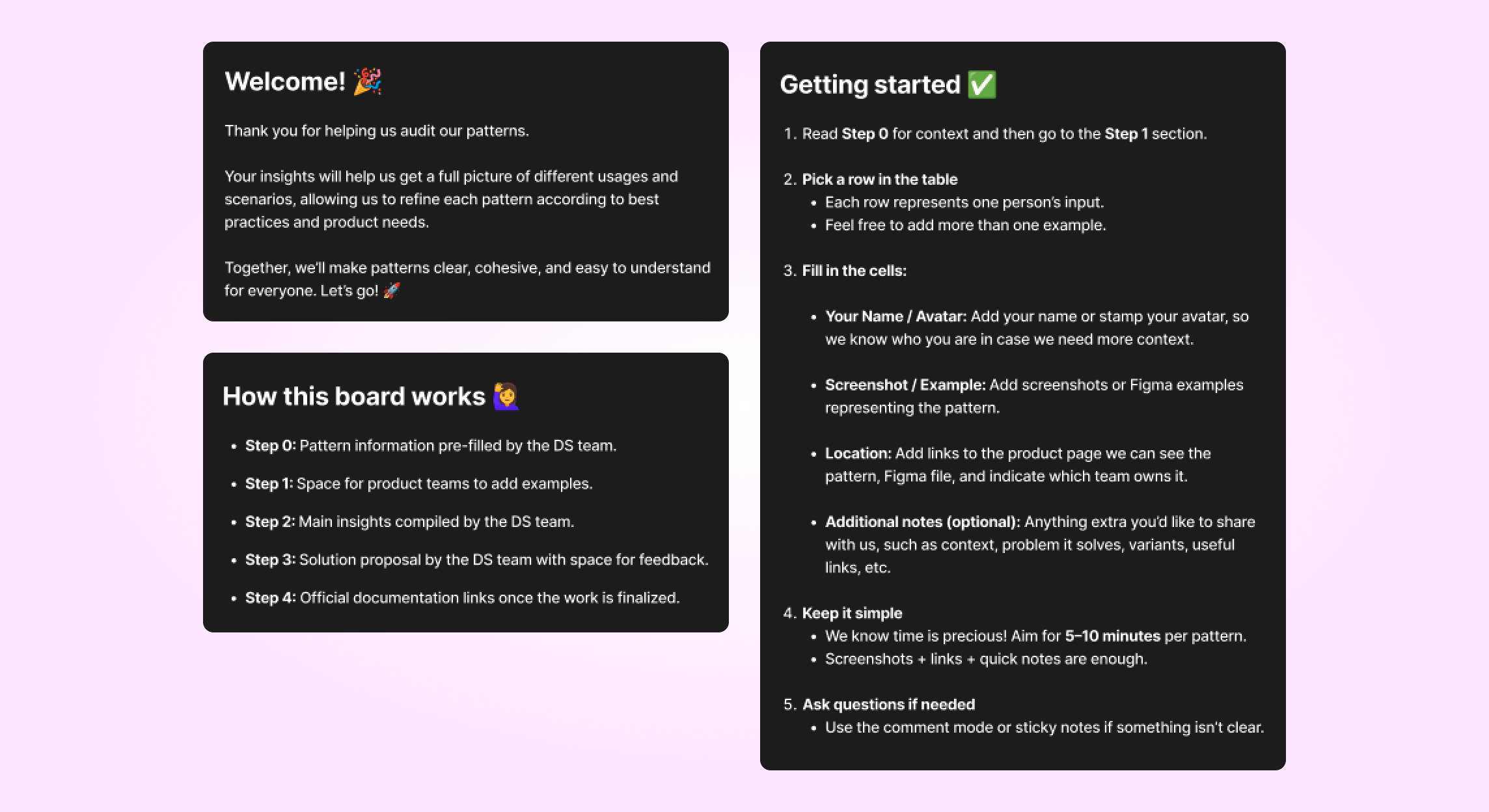
Welcome section
Clear steps
Colour-coded tags
A “we know time is precious, you won’t need more than 5-10 minutes to fill in” note so nobody felt overwhelmed
Here’s roughly how it was supposed to work: a collaborative cycle between the Design System and Product teams.
Audit → Analysis and benchmark → Design and documentation → Validation → Iteration → Done
Simple on paper. And it worked… until it didn’t.
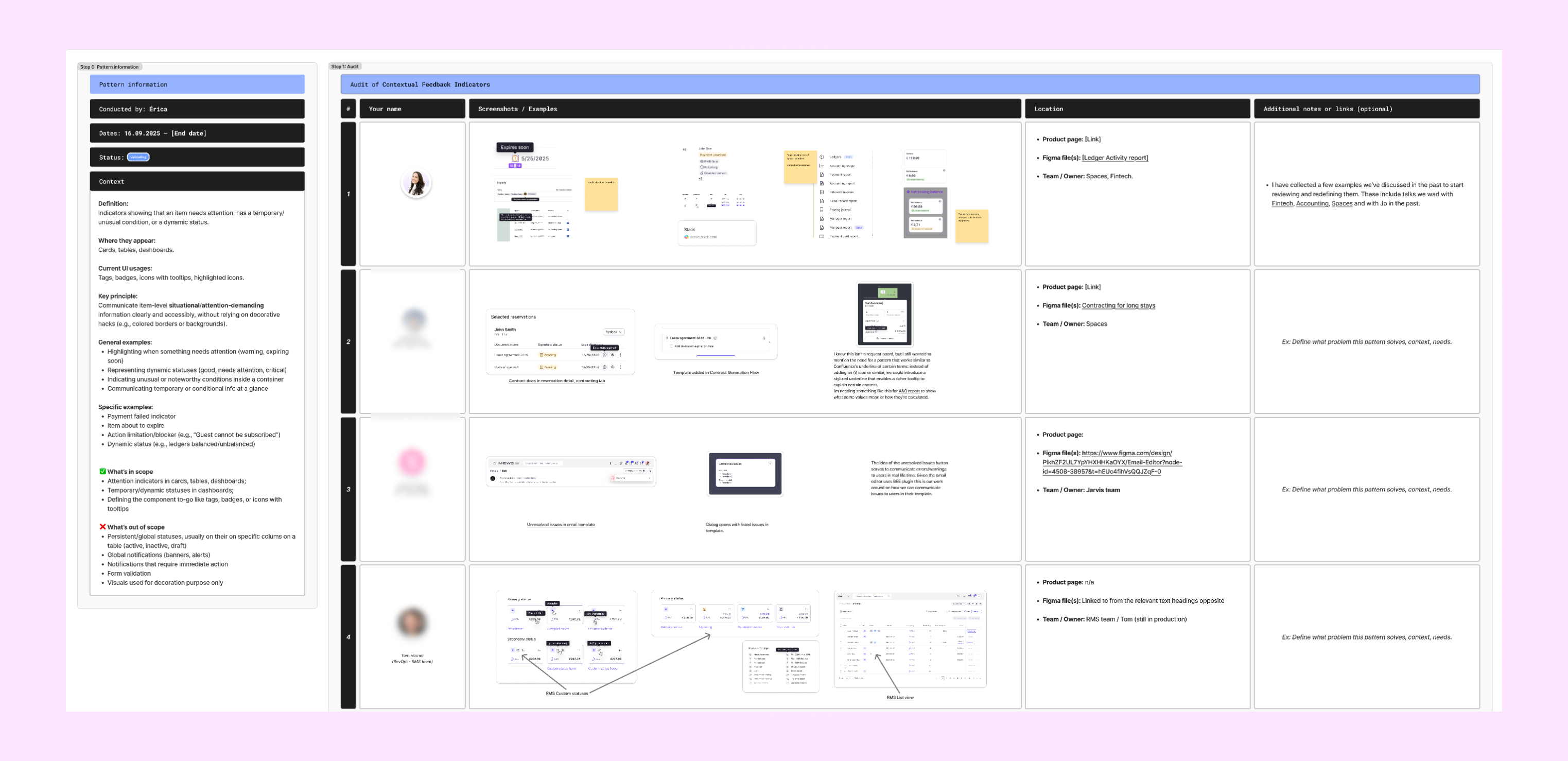
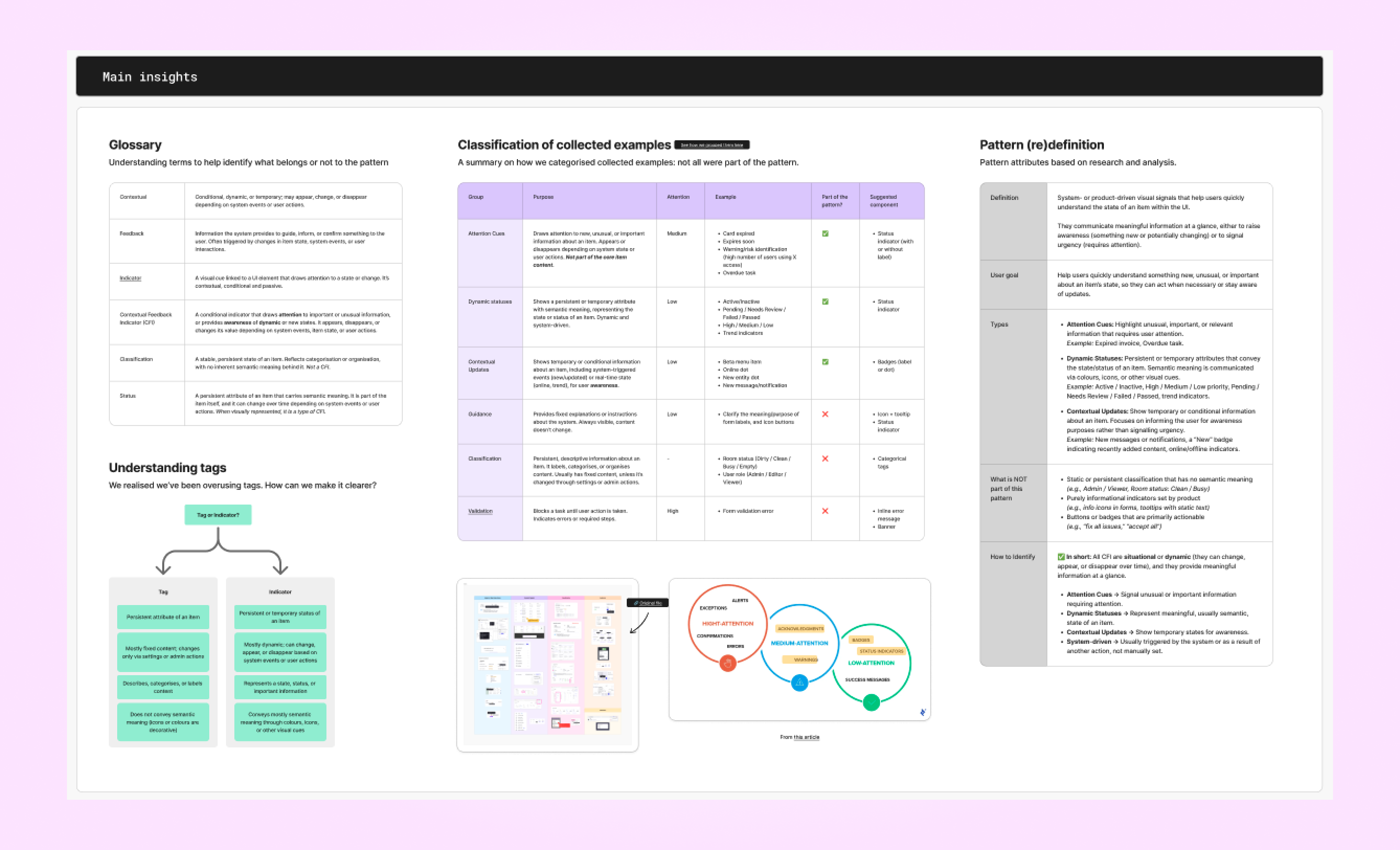
I analysed the inputs, ran the research, benchmarked other systems, best practices, and came up with a NICE solution for our pilot pattern that would prove the new process (also freshly documented!) right.
Until I got to the async feedback step. The part where we’d share what we found, the potential solution, and get comments to know where to improve.
I even started working on a second pattern audit in the meantime… waiting for the feedback.
But to my surprise, all I got was silence.
I was frustrated. I spent weeks months taking care of this project. And even though designers were using my new pattern (yay!), the silent feedback haunted me a little every time I remembered it.
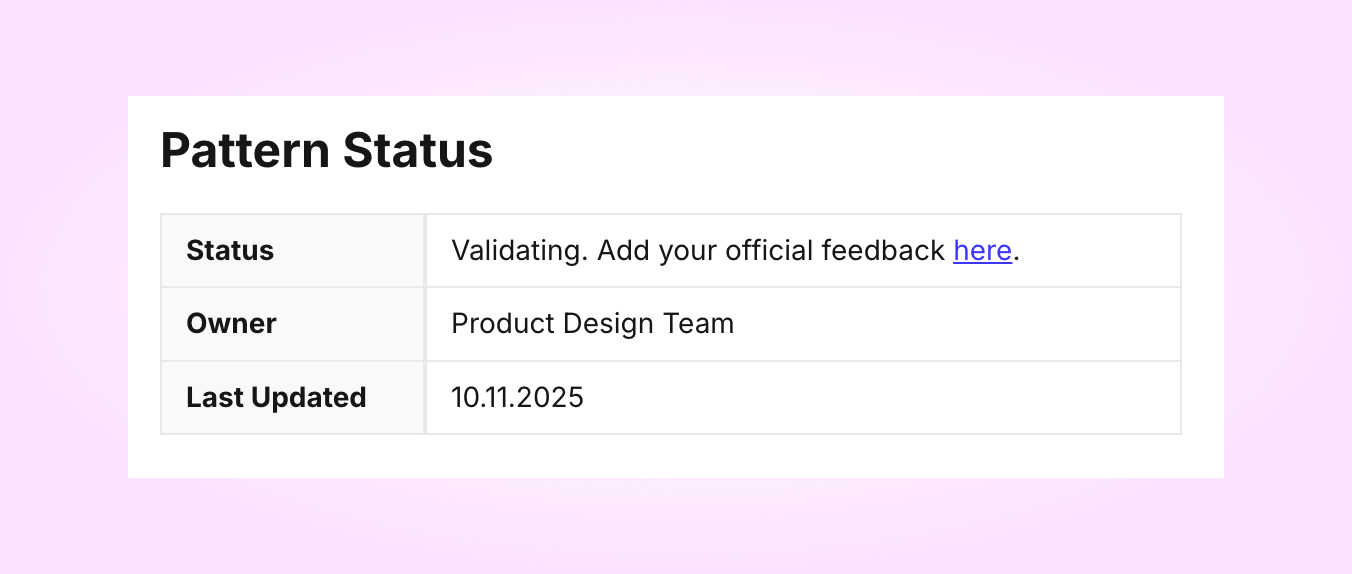
Here’s the good part, though: the world is moving fast, and when I look at this project through today’s lens, I don’t feel frustrated anymore. Because I can see exactly what I’d do differently now.
What I missed at the time
The Design System team lived a little isolated from the product teams. We were mostly hearing from product teams via requests in our Slack channel.
What I didn’t know was that there was already a weekly design huddle for B2B designers (which today is one of my favourite rituals!), a live space, every week, for exactly this kind of feedback. I found out way too late for this project to benefit from it.
If I’d known sooner, I would’ve just shown up. But I am not one to create excuses. I believe I’d still have gotten the same thing wrong.
The decision that kept haunting me
Looking back, even if I'd known about the huddle from day one (or if it didn’t exist at all), I'd probably still have made the same core mistake.
I assumed no one would have time to contribute to a real feedback loop, as if they'd already spent all their time on the audit (they hadn't). So I never actually organised a proper one. I built a space for feedback and just... hoped for the best.
I spent a lot of energy trying to make it as lightweight and asynchronous as possible, assuming that if I reduced the effort, people would naturally participate.
Instead, I should have been asking a different question:
How do I create more time for the conversations that actually shape the pattern?
Well, today, AI could’ve played a big part in it.
What I'd do today
I would save time on manual, slow work and use that time to get in touch with people (and the existing huddle!).
Things like audits, which would take days just waiting for external inputs, could be replaced by an AI agent that scans the code base for a specific pattern, produces an inventory, and flags inconsistencies (spoiler: I already created that command).
Benchmarking could be reduced to a few minutes of work, rather than spending hours opening multiple design systems, patterns documentation and comparing them manually.
And instead of writing every explanation from scratch, AI could produce a first draft that can be edited and improved. In fact, I recently created something similar that generates standard component documentation in our writing style (for now, human-friendly only), and it’s great!
The part that stays human
Some things can be accelerated. But judgement shouldn’t.
The decision-making, the orchestration, the refinement. They still need the human touch.
The time AI would help us save should be spent getting that feedback. Joining the design huddles. Showing a rough proposal while people are already in the room thinking about it.
Instead of saying: “Please leave a sticky note whenever you have time.”
I’d say: “Here’s what I found. Tell me where I’m wrong.”
That would be a completely different conversation.
One that, looking back, was exactly the conversation this project needed all along, and wouldn’t have haunted me when I was trying to sleep.
Coming soon: How I actually created the Cursor command that helped me audit patterns.